

Ford Super Duty Towing Guide: F-250 vs F-350
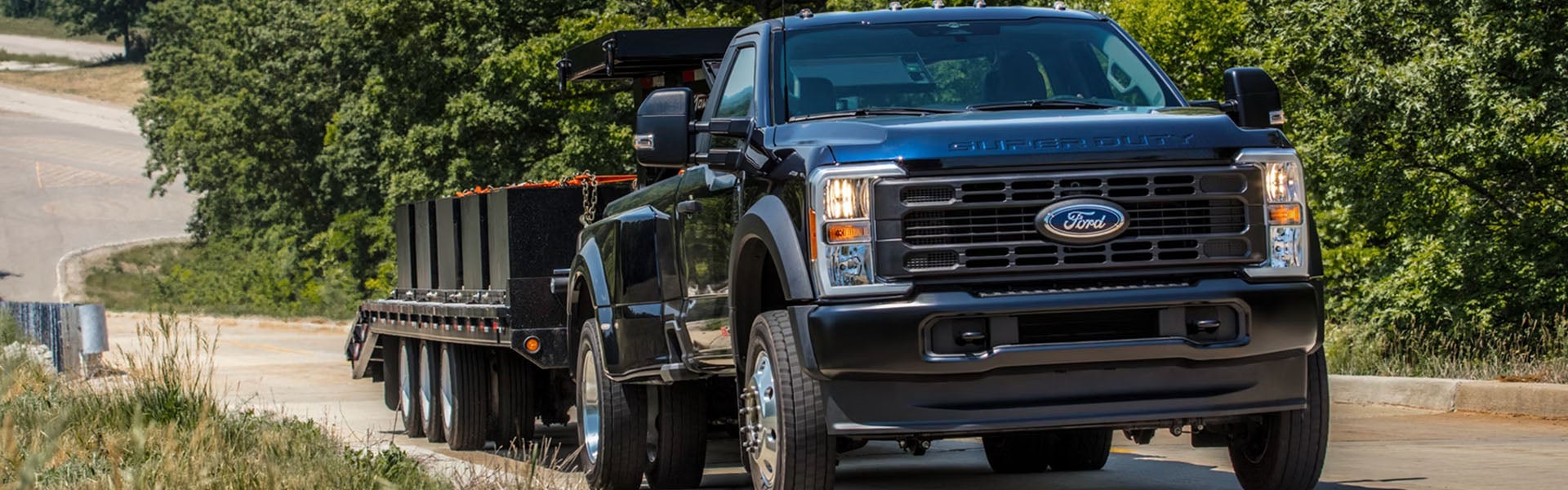
Ford Super Duty Towing Guide: F-250 vs. F-350
If you're shopping for a heavy-duty truck that can handle demanding jobs, tow a camper, haul equipment, or help power your business, the Ford Super Duty lineup deserves a closer look. Two of the most popular options are the Ford F-250 Super Duty and the Ford F-350 Super Duty. Both deliver impressive capability, but which one is right for you?At Williams Ford of Sayre, we know choosing the right truck means finding the right balance of towing power, payload capacity, everyday comfort, and functionality. This guide breaks down the differences between the Ford F-250 and F-350, explains what to consider when towing, and helps you decide which Super Duty best fits your needs.
Ford F-250 vs. F-350: What's the Difference?
The Ford F-250 and Ford F-350 share much of the same Super Duty DNA, including available powerful gas and diesel engines, advanced towing technology, and a durable, high-strength steel frame. However, the F-350 offers additional heavy-duty configurations designed to handle more demanding hauling and towing requirements.The biggest difference isn't simply the number on the tailgate. Your truck's specific engine, axle ratio, cab style, drivetrain, bed length, and towing equipment all influence its capabilities.
The Ford F-250 is an excellent choice for drivers who need serious towing power for work and recreation. The Ford F-350 is worth considering if your towing and payload needs call for additional capacity, especially when properly equipped with dual rear wheels.
Ford Super Duty Towing Capacity at a Glance
Ford offers a range of towing configurations across the Super Duty lineup. For the 2026 model year, the maximum available ratings for the Super Duty family reach:- Up to 30,000 pounds of conventional towing
- Up to 35,000 pounds of fifth-wheel towing
- Up to 40,000 pounds of gooseneck towing
Before choosing your truck, consult the official Ford towing guide for the exact model year and configuration you're considering.
Ford F-250 Super Duty: Heavy-Duty Capability for Work and Play
The Ford F-250 Super Duty delivers the strength and versatility many truck owners need without automatically stepping up to the F-350.Whether you're towing a travel trailer, hauling construction equipment, transporting recreational vehicles, or tackling projects around your property, the F-250 offers a range of configurations to match your lifestyle.
Why Choose the Ford F-250?
1. Impressive towing capabilityWhen properly equipped, the F-250 can handle substantial towing demands. Depending on the configuration, it can be suitable for work trailers, boats, campers, equipment trailers, and other heavy loads.
2. Powerful engine options
Available engines include the 6.8L V8 gas engine, 7.3L V8 gas engine, 6.7L Power Stroke V8 Turbo Diesel, and 6.7L High Output Power Stroke V8 Turbo Diesel. Availability varies by trim and configuration.
3. Versatility for everyday driving
The F-250 can serve as a work truck during the week and a towing companion for weekend adventures. Cab, bed, drivetrain, and trim options help you tailor the truck to your needs.
4. Advanced towing technology
Available towing features can help make hitching, maneuvering, and monitoring a trailer easier. Depending on the configuration and equipment, features may include an integrated trailer brake controller, Pro Trailer Backup Assist, and Pro Trailer Hitch Assist.
Who Should Consider the F-250?
The F-250 may be the right fit if you:- Tow a camper or recreational trailer.
- Pull work trailers or equipment.
- Need a capable truck for a farm, property, or business.
- Want heavy-duty capability for both work and personal use.
- Have towing requirements that fit within the truck's specific ratings.
Ford F-350 Super Duty: More Capacity for Demanding Jobs
When your work or recreation requires additional payload and towing capacity, the Ford F-350 Super Duty deserves a closer look.Like the F-250, the F-350 offers powerful engine choices and a variety of configurations. However, it also offers a dual-rear-wheel configuration, commonly called a dually, that can provide additional payload capacity and greater stability for certain heavy towing applications.
Why Choose the Ford F-350?
1. Additional payload potentialPayload is the amount of weight your truck can carry, including passengers, cargo, accessories, and the portion of a trailer's weight resting on the truck. Properly equipped F-350 configurations can provide higher payload ratings than comparable F-250 configurations.
2. Available dual rear wheels
The F-350 is available with single rear wheels (SRW) or dual rear wheels (DRW), depending on the configuration. A dually may be especially useful for heavy fifth-wheel and gooseneck trailers because its wider rear tire footprint can improve stability.
3. Built for demanding towing applications
If you regularly tow heavy equipment, large campers, livestock trailers, or substantial gooseneck loads, the F-350 may offer the additional capacity your situation requires.
4. Work-ready versatility
From job sites to agricultural work and commercial applications, the F-350 offers configurations designed to accommodate a wide range of demanding tasks.
Who Should Consider the F-350?
The F-350 may be the better fit if you:- Regularly tow a heavy fifth-wheel camper.
- Pull a large gooseneck equipment or livestock trailer.
- Need additional payload capacity.
- Carry heavy tools, equipment, or other cargo alongside your trailer.
- Want the available dual-rear-wheel setup for your towing application.
F-250 vs. F-350: Which Is Better for Towing?
The answer depends on what you're towing, how much it weighs when fully loaded, and how often you tow it.| Towing need | Model to consider |
|---|---|
| Everyday work and moderate-to-heavy towing | F-250 |
| Travel trailers and recreational towing | F-250 or F-350 |
| Heavy fifth-wheel campers | F-350 may be a better fit |
| Heavy gooseneck trailers | F-350 may be a better fit |
| High payload requirements | Compare properly equipped F-350 configurations |
| Heavy-duty commercial or agricultural use | F-250 or F-350, depending on the load |
Gas vs. Diesel: Which Ford Super Duty Engine Is Right for You?
Your engine choice can make a meaningful difference when selecting a Ford F-250 or F-350.Gas Engines
The available 6.8L and 7.3L V8 gas engines offer strong capability for drivers who need a powerful work truck and towing versatility. A gas-powered Super Duty may be worth considering if your towing requirements fit its ratings and you don't need the characteristics of a diesel powertrain.Power Stroke Diesel Engines
The available 6.7L Power Stroke V8 Turbo Diesel and 6.7L High Output Power Stroke V8 Turbo Diesel are designed for demanding heavy-duty applications. Diesel configurations offer substantial torque, which can be particularly useful when pulling heavy trailers or traveling with substantial loads.The right engine depends on your trailer weight, annual mileage, terrain, intended use, and ownership costs. Compare the exact towing and payload ratings of each configuration rather than choosing based on engine type alone.
What Is the Difference Between Conventional, Fifth-Wheel, and Gooseneck Towing?
Understanding your trailer's hitch type is an important part of selecting the right Super Duty.Conventional Towing
Conventional towing uses a hitch mounted at the rear of the truck. This is common for boats, utility trailers, travel trailers, and many equipment trailers.Fifth-Wheel Towing
Fifth-wheel trailers connect to a hitch mounted in the truck bed. This setup is popular with larger recreational campers and some commercial applications.Gooseneck Towing
Gooseneck trailers connect to a ball hitch mounted in the truck bed. They're frequently used for livestock trailers, heavy equipment, and other demanding hauling applications.Each towing method places weight on the truck differently. Fifth-wheel and gooseneck trailers typically transfer a substantial portion of their weight directly onto the truck, making payload capacity especially important.
Understanding Towing Capacity vs. Payload Capacity
One of the most important things to understand when comparing the Ford F-250 and F-350 is that towing capacity and payload capacity are not the same.Towing capacity is the maximum permitted weight of the trailer a truck can tow under specified conditions.
Payload capacity is the amount of weight the truck itself can carry, including occupants, cargo, aftermarket accessories, and trailer tongue or pin weight.
For example, imagine you're towing a fifth-wheel camper. Even if the camper's total loaded weight is within your truck's maximum trailer rating, the portion of that weight resting on the truck must also fit within its payload and axle limits.
This is why looking at just one maximum towing number can be misleading. Your truck must be capable of handling the entire combination safely and within all applicable weight ratings.
How to Choose the Right Ford Super Duty for Your Trailer
Before deciding between the F-250 and F-350, take these steps:- Determine your trailer's loaded weight. Use its actual loaded weight when possible, rather than relying only on its advertised dry weight.
- Identify your hitch type. Conventional, fifth-wheel, and gooseneck towing have different requirements.
- Check payload requirements. Account for passengers, cargo, accessories, and trailer tongue or pin weight.
- Compare specific truck configurations. Engine, axle ratio, drivetrain, cab style, bed length, and packages can affect towing ratings.
- Review the manufacturer's ratings. Verify the truck's maximum loaded trailer weight, GVWR, GCWR, and GAWR.
- Consider your future needs. If you expect to move to a larger camper or heavier trailer, choose a configuration that accommodates those plans within its ratings.
Find Your Ford Super Duty at Williams Ford of Sayre
Choosing between the Ford F-250 and F-350 comes down to finding the right combination of capability, comfort, and functionality for your needs. The F-250 can be an excellent choice for a wide range of demanding towing tasks, while the F-350 offers additional configurations for drivers who need more payload or heavy-duty towing capability.At Williams Ford of Sayre, we're here to help you explore your options and find a Super Duty that fits your work, recreation, and hauling requirements.
Whether you're looking for an F-250 for your next project or an F-350 built for demanding towing applications, our team can help you compare available trucks and review their specifications.
Ready to find your next Ford Super Duty? Explore our available Ford trucks or contact Williams Ford of Sayre to discuss your towing needs and find the right truck for the job.